Morgans To 1997
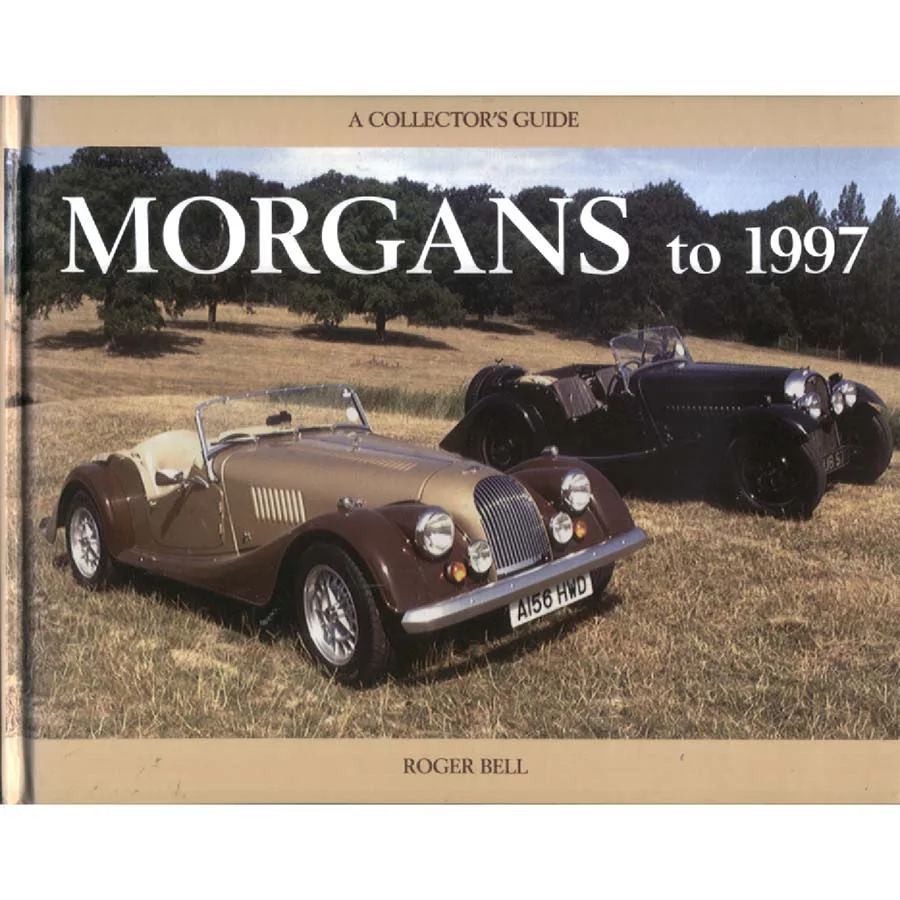
Publisher: Motor Racing Publications
Format: Hardback
ISBN: 9781899870202
There are motor manufacturers who embrace progress with enormous enthusiasm, constantly introducing new designs, electronic innovations and increasingly complicated machinery. Then there is Morgan, a wonderfully eccentric British company that looked at the traditional sports car, decided it was already rather splendid, and spent much of the twentieth century demonstrating that modernity was an entirely optional extra. Why reinvent the automobile every five years when a perfectly respectable design could continue providing enjoyment for generations, preferably with a little polished wood and a reassuring quantity of leather?
In Morgans to 1997 (1997), Roger Bell explores the remarkable history of one of Britain’s most distinctive and enduring sports car manufacturers. Published by Motor Racing Publications, this fascinating account celebrates the engineering, craftsmanship and magnificent individuality of Morgan motor cars, tracing their development through an extraordinary period of British motoring history.
The Morgan story began in 1909, when H. F. S. Morgan introduced his ingenious three-wheeled cyclecar, a lightweight sporting machine that demonstrated how much entertainment could be extracted from a modest engine, minimal bodywork and a rather adventurous approach to personal comfort.
These early three-wheelers established Morgan’s reputation for clever engineering and lively performance, proving that the fourth wheel was apparently an unnecessary extravagance. Their unusual appearance and remarkable sporting abilities attracted devoted enthusiasts, many of whom were presumably delighted to discover that their vehicles possessed fewer tyres to replace.
The arrival of the four-wheeled Morgan 4/4 in 1936 represented a significant concession to convention, although the company wisely retained its commitment to traditional styling and lightweight construction. Over subsequent decades, Morgan developed a range of celebrated sports cars, including the Plus 4 and formidable Plus 8, combining classic British elegance with increasingly enthusiastic performance.
Bell’s account captures the character of a manufacturer that remained resolutely independent while much of the British motor industry underwent mergers, reorganisations and the occasional spectacular financial collapse.
Naturally, Morgan’s continued use of traditional construction techniques became an essential part of its charm. The famous ash-framed bodywork, hand-finished interiors and timeless styling helped create cars whose owners could confidently park beside much older machinery without anybody immediately noticing the difference.
For enthusiasts, this was precisely the attraction. A Morgan offered open-air sporting motoring with genuine individuality, although its occupants were occasionally required to accept that effective weather protection and a completely comfortable ride were concessions to modern decadence.
Condition: Good. This is a previously owned copy dating from 1997, displaying ordinary signs of age and handling. Unlike a classic Morgan, it requires no specialist attention to wooden body framing, leather upholstery or mechanical components that might have been familiar to one’s grandfather.
Published by Motor Racing Publications in 1997. ISBN: 9781899870202.
Offered by Crappy Old Books, where we admire the magnificent British determination to preserve traditional engineering, particularly when it involves producing beautiful sports cars that appear blissfully unaware of changing automotive fashions.
An excellent addition to any collection of Morgan literature, classic British sports cars or automotive history. Particularly recommended for enthusiasts who appreciate that progress is all very well, but sometimes the finest motoring experience involves a long bonnet, an open cockpit and a manufacturer that sees absolutely no reason to abandon a perfectly good idea merely because it is eighty years old.
Keep browsing: See more Transport books Other books by Roger Bell